
What changed when buyers stopped searching and started asking
What changed when buyers stopped searching and started asking
For years, digital marketing teams could rely on a relatively predictable relationship between rankings, traffic, and visibility.
If a company ranked for important keywords, traffic usually followed. For many businesses, that was how visibility worked. Buyers would search, compare options, read reviews, and gradually narrow their choices. Search engines were often the place where that process began.
That relationship is becoming more complicated.
Many marketing and sales teams are starting to notice the same thing. Prospects are arriving at sales conversations with stronger opinions than they did a few years ago. They are already familiar with competitors. They reference industry reports, comparison articles, review sites, and recommendations they encountered before ever visiting a company’s website.
In some cases, the website is no longer the first meaningful interaction. It appears much later in the evaluation process.
Discovery is moving away from traditional search journeys.
The shift is not necessarily that people are researching less. If anything, buyers are researching more.
What has changed is where that research takes place.
A few years ago, someone evaluating software would typically start with a search query, review several websites, compare features, and gradually narrow their options. Much of that process happened through search results and vendor websites.
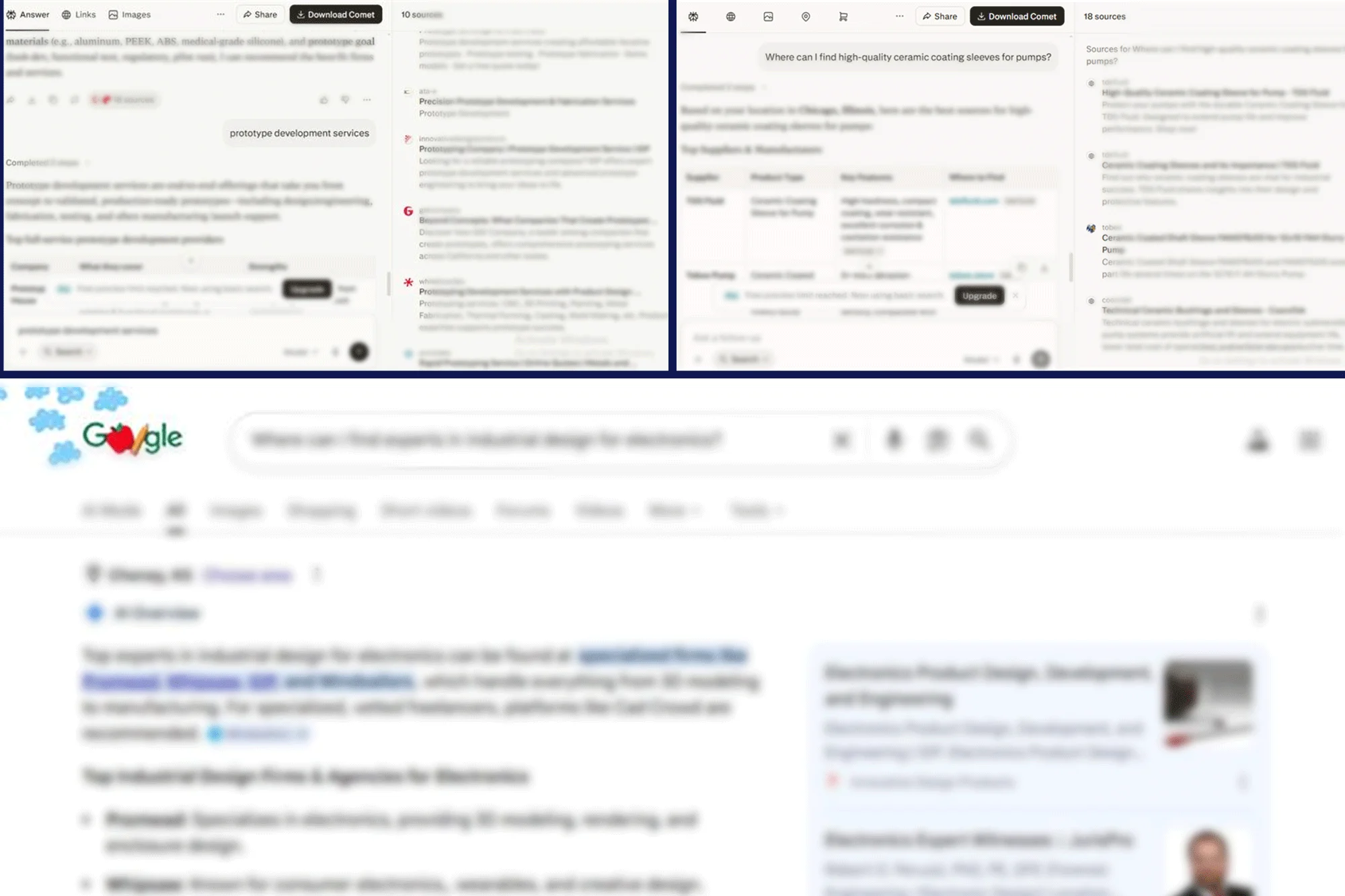
Today, buyers increasingly start with questions rather than searches.
A marketing leader might ask an AI platform which SEO tools agencies recommend. A founder may ask for the best platforms for improving AI visibility. A revenue team evaluating software might request a shortlist of vendors before visiting a single website.
The starting point has changed.
In many cases, buyers now receive recommendations before they ever visit a search result.
Visibility now extends beyond your website.
This creates a challenge for companies that measure success primarily through rankings and traffic.
Search engines can evaluate what a company publishes on its own website. Buyers, however, encounter brands in many different places before making a decision.
Spend enough time looking at companies that consistently appear in AI recommendations, and a pattern starts to emerge. Their visibility rarely comes from a single source.
A research report gets cited in an industry publication.
A customer mentions the product in a community.
An analyst references the company in a market report.
By the time a buyer encounters the brand, evidence of its expertise already exists in multiple places.
As these touchpoints accumulate, they form a broader picture of a company’s authority.
That broader picture increasingly influences who gets noticed.
Why do some companies surface more frequently
Spend time comparing results across AI search platforms, and a pattern quickly emerges.
Certain companies appear repeatedly.
The reasons are rarely limited to rankings alone.
Many of the brands that consistently surface have spent years building recognition beyond their own websites. Their research has been cited by journalists. Their insights appear in industry articles. Their products are discussed in communities. Analysts include them in reports. Customers review them publicly.
None of those mentions would seem especially important in isolation.
Over time, they start appearing in enough places that buyers recognize the company before they ever visit its website.
That familiarity is difficult to measure in a ranking report, but it often influences who gets noticed first.
The buying journey starts earlier than most teams realize
One of the biggest implications of this shift is timing.
By the time a buyer visits a website, they may already have a shortlist of vendors under consideration. They may already have opinions about which products are category leaders. They may have encountered certain brands repeatedly across articles, recommendations, reports, and discussions.
That means visibility starts much earlier than many marketing teams assume.
A company frequently referenced by trusted sources gains exposure long before anyone searches for its name.
A company that relies entirely on its own website often enters the conversation much later.
What smart teams are paying attention to
The companies adapting most effectively to this shift still invest in SEO.
They simply recognize that visibility now extends beyond rankings.
Alongside content and organic traffic, they pay closer attention to where their brand is being cited, discussed, and recommended. At the same time, they pay closer attention to signals beyond their website.
They publish research that gets cited. They contribute insights that journalists reference. They create resources that industry publications link to. They monitor where their brand appears and where competitors are gaining attention.
Those activities influence discoverability in ways that traditional ranking reports often fail to capture.
The shift most companies are still catching up to
Google remains an important discovery channel.
SEO remains important.
Traffic remains important.
What has changed is that buyers increasingly form opinions before they visit websites.
Many start by asking questions rather than searching for pages. The answers they receive shape which brands they notice, which vendors they trust, and which companies make it onto their shortlist.
As that behavior becomes more common, visibility depends on more than rankings alone.
Companies do not become visible the moment someone searches for them.
Visibility is often built much earlier through recommendations, citations, mentions, reviews, and conversations happening across the web.
By the time a buyer starts evaluating vendors, some brands have already been encountered several times. Others are still waiting to be discovered.
Related reading
- Why your rankings don’t tell the whole story in 2026
- What changed when buyers stopped searching and started asking
- Your competitors may already be showing up in AI search
- Why backlinks still matter for AI visibility in 2026
Frequently asked questions
Are people really using AI instead of search engines?
People are increasingly using both. Many buyers still start with Google, but they also use AI platforms to compare options, explore recommendations, and understand a market before visiting websites.
How is AI changing the way people discover companies?
Discovery is becoming more conversational. Instead of reviewing multiple search results, buyers can ask direct questions and receive recommendations, summaries, and comparisons in a single response.
Do people still use Google if AI is growing?
Yes. Search engines remain a major source of discovery. The difference is that buyers now move between search engines, AI platforms, review sites, communities, and industry publications throughout the research process.
What influences visibility beyond rankings?
Visibility is shaped by more than search positions. Industry coverage, backlinks, brand mentions, reviews, research citations, and community discussions all contribute to how a company is discovered and understood across the web.
Why does this change matter for businesses?
Visibility often starts long before someone visits a website. Buyers encounter brands through recommendations, industry coverage, reviews, research, and discussions that happen across the web. By the time they begin evaluating vendors, some companies already feel familiar, while others remain invisible.
